When our leadership context shifts, our repertoire must expand to match it.
By Dr Amanda Bell
What is the leadership flatline?
Leadership, like any profession, follows a cycle. Yet too often, senior leaders, particularly those in education, health, and community sectors, find themselves at risk of professional flatlining: a state where mastery and comfort begin to erode curiosity, innovation, and learning agility.
At the University Colleges Australia Biennial Conference 2023 in the Gold Coast, leaders explored this phenomenon through the lens of our Model of Leadership, a framework developed to help individuals and institutions assess not only their ability to perform but also their likelihood to impact. The model maps leadership through three intersecting dimensions: context, capability, and capacity. Together, they define the ask of leadership, the ability of leadership, and the likelihood of impact.
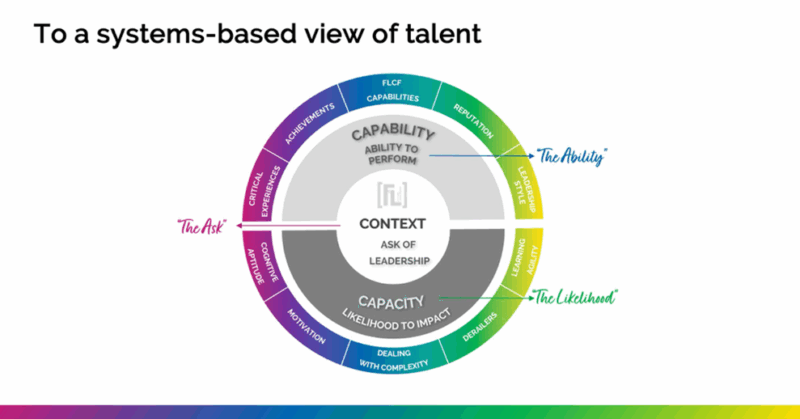
Understanding where one sits across these dimensions provides a critical mirror for renewal. As Dr Amanda Bell reflected,
“Flatlining is not failure; it is feedback. It tells us that the leadership context has shifted, and our repertoire must expand to match it.”
The Economics of Professional Life: Learning, Leveraging, and Letting Go
Leadership is as much an economic construct as a personal one. The forum introduced the concept of Professional Economics, a lifecycle model illustrating the stages leaders move through, including learning, leveraging, contracting, renewing, and eventually transitioning or reimagining.
Alongside my colleague, Dr Marcele De Sanctis, we invited participants to consider where they stood within their own contract cycles. Were they still learning? Were they leveraging hard-earned wisdom? Or were they repeating patterns that no longer delivered value?
This reflection uncovered a truth familiar to organisational psychologists: professional growth and leadership transition are non-linear. It is cyclical, responsive to both internal motivation and external complexity. As Marcele observed, “Our capacity to lead is not static; it expands and contracts according to the quality of our reflection, the stretch of our environment, and the psychological safety of our context.”
The Dunning–Kruger Effect and the Myth of Mastery
A highlight of the morning discussion was a deep dive into the Dunning–Kruger Effect. This effect refers to the cognitive bias where individuals overestimate their competence at early stages of leadership and underestimate it at later stages.
Participants examined their journeys, noting how early confidence often masks developmental gaps, while mature leaders, equipped with broader awareness, may undervalue their expertise. Recognising this paradox allows leaders to recalibrate humility and confidence, to stay teachable, while still backing their wisdom.
I see this contextualised within higher education leadership, and noted that:
“Institutions thrive when leaders have both the courage of their convictions and the humility of perpetual learners.”
Professional Aging: AI, Wisdom, and the Human Edge
In an era where artificial intelligence increasingly encroaches on the cognitive and administrative domains of leadership, the forum posed a provocative question: What remains uniquely human in leadership?
Under the theme Professional Aging: AI vs Human Wisdom, leaders explored how experience, intuition, and moral reasoning distinguish human judgment from algorithmic processing. While AI can predict patterns and analyse complexity, it cannot yet replicate empathy, ethical discernment, or the capacity to hold paradox.
Dr De Sanctis framed this through the lens of organisational psychology:
“Wisdom is the integration of knowledge, experience, and reflection over time. It cannot be automated, it must be earned.”
AI can support leadership, but not substitute for it. The challenge is not competition but coexistence, harnessing technology to enhance rather than erode human agency.
Capability as the Currency of the Future
The afternoon session shifted focus to leadership capabilities. The tangible and intangible traits that drive impact. The Future Leadership Capability Framework served as the organising scaffold, encouraging participants to identify which two capabilities would most enable their next stage of maturity.
This exercise drew attention to the dynamic interplay between technical mastery and adaptive capacity. Leaders recognised that while technical expertise anchors credibility, adaptability sustains relevance.
In my work with senior leaders and boards, every day I witness that the capabilities of tomorrow are deeply human. I see them as complex problem-solving, empathy, contextual intelligence, and courage in ambiguity. These are the qualities that build trust, guide transformation, and ensure ethical stewardship in turbulent systems.
Learning as Leverage: Investing in Professional Renewal
Leadership renewal demands continuous learning of future capabilities, but not all learning is created equal. The forum highlighted several powerful examples of professional development: from the Cranlana Centre for Ethical Leadership to Oxford’s Institute of Continuing Education and the Melbourne Business School’s Women in Senior Leadership Program.
Such experiences remind us that development is not remedial; it is regenerative. Professional learning allows leaders to reconnect with their sense of purpose and stretch beyond the confines of institutional routine.
Marcele captured this in psychological terms:
“Learning is one of the most potent levers for emotional rejuvenation. It reactivates curiosity, rebalances our cognitive load, and reignites intrinsic motivation.”
The Human Equation: Context, Capability, and Capacity
At the heart of the Future Leadership approach lies a simple but powerful Model of Leadership: Context, Capability, Capacity.
-
Context defines the ask of leadership: the strategic, social, and cultural expectations leaders must meet.
-
Capability defines the ability to perform: the knowledge, skills, and mindset required.
-
Capacity defines the likelihood to impact: the psychological and physiological readiness to sustain performance.
When these three dimensions align, leadership is amplified. When they fall out of sync, performance wanes, and renewal becomes essential.
This triad not only reframes how we assess leaders but also how leaders assess themselves, through a lens of alignment rather than deficit.
Collective Wisdom: Voices from the Panel
The forum’s Expert Panel featured Dr Sally Pitkin AO, Dr Liam Mayo, and Catherine O’Sullivan. They each brought rich cross-sector perspectives.
Dr Pitkin emphasised governance as a moral and strategic act, reminding participants:
“Boards must not only oversee performance but steward purpose.”
Catherine O’Sullivan reflected on the transformative power of education and equity, illustrating how inclusive leadership can reshape systems from within.
Dr Mayo challenged attendees to think beyond institutional silos, envisioning:
“a future where Australians live and age with dignity and trust.”
His insights on futures thinking and social innovation underscored that leadership renewal is not just a personal imperative; it is a societal one.
Toward a Renewed Leadership Ethic
As the day closed, Dr De Sanctis and I invited participants to reflect on their next inflection point: What will your next stage of leadership maturity require of you?
This question encapsulates the essence of the forum. Leadership is not a linear ascent but a continual recalibration, balancing the demands of context with the evolution of self.
Renewal, therefore, is not optional. It is a professional responsibility to ourselves, to our institutions, and to the communities we serve.